
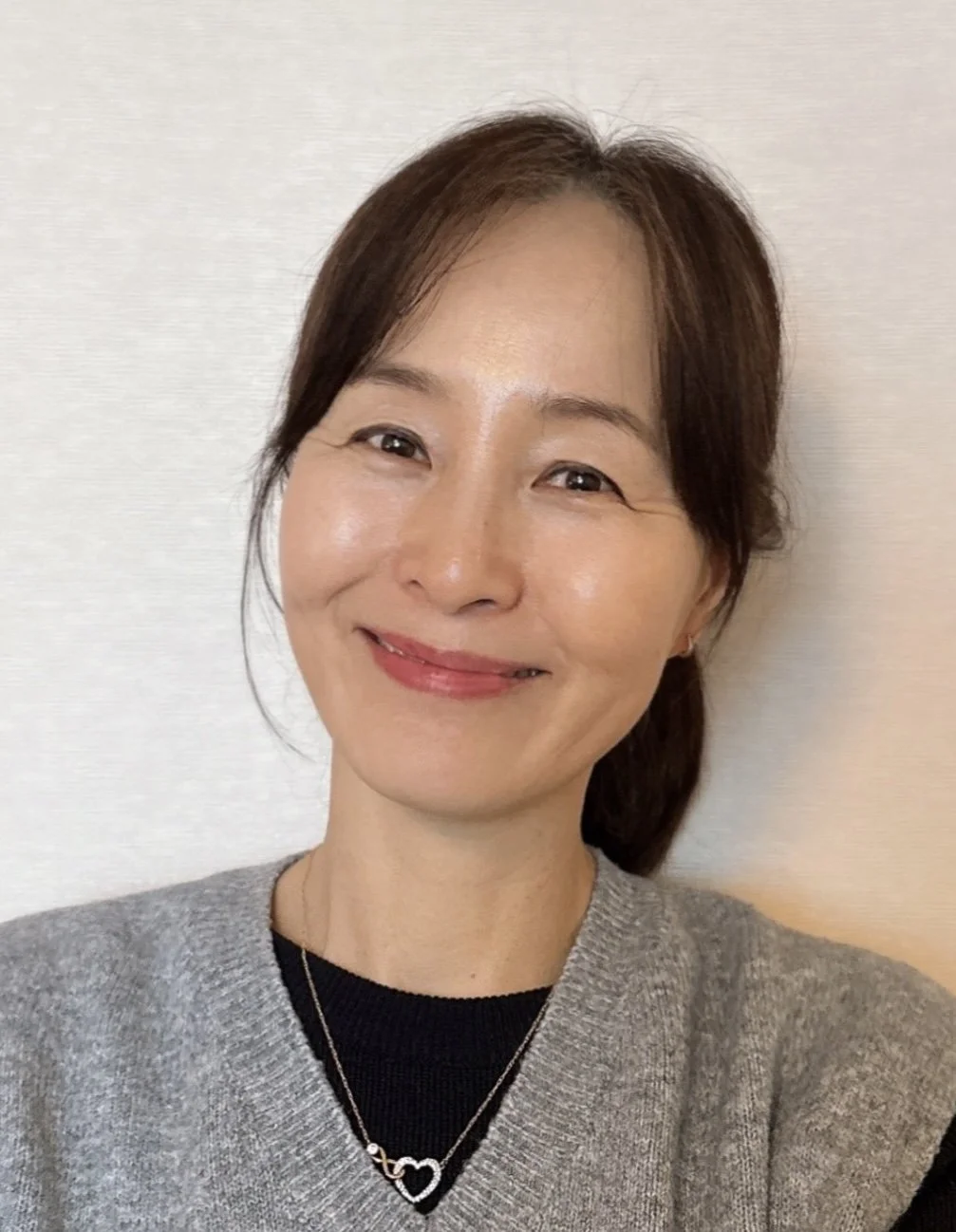
Hyangmi Kang
LPCC
Top specialty:
Play therapy
DIRFloortime for ASD children
Parent Coaching
Hyangmi “Mimi” Kang was born and raised in South Korea and moved to the United States after marrying her husband, whose work brought them here. Her journey began with a deep interest in children’s development, leading her to study child development and work as a preschool teacher in Head Start programs and later as a supervisor in a Native American tribal preschool program.
Through these experiences, she became increasingly aware of the emotional challenges many children face and felt called to support them in a deeper, more meaningful way. This led her to pursue advanced training in counseling and play therapy, becoming a state licensed clinician (LPCC) and Registered Play Therapist (RPT). Since then, her work has focused on supporting children and their families, including those with neurodevelopmental differences.
She is especially passionate about parent coaching and guiding caregivers to better understand and connect with their children. She holds a Ph.D. in Child Development and Family Studies from Seoul National University and provided therapy for children and parent coaching at the Seoul National University Child Development Center until recently. Her doctoral work, grounded in DIR/Floortime—a developmental and relationship-based approach—explored the impact of father-child interactions, particularly in families with autistic children.
In addition to her clinical work, she has taught graduate-level courses in play therapy, group counseling, child development, and adolescent counseling, integrating theory with practical, relational approaches to training future professionals.
Her work is rooted in the belief that meaningful and lasting change happens through relationships. By helping parents feel more confident and connected, she supports children in developing emotional regulation, communication, and a stronger sense of self.
Beyond her professional work, she is a mother of two grown children and is grateful for the support of her husband throughout her personal and professional journey.
Play Therapy
Play therapy is a developmentally appropriate approach that helps children express their thoughts, feelings, and experiences through play—their natural language. Through carefully guided play, children can process emotions, develop coping skills, and build confidence in a safe and supportive environment.
Play therapy can be especially helpful for children experiencing:
• Anxiety and depression
• School-related challenges (e.g., school refusal, academic stress, peer difficulties)
• Behavioral concerns
• Emotional regulation difficulties
• Social skills challenges
• Grief and loss
• Trauma or stressful life events
• Family changes (e.g., divorce, relocation)
• Low self-esteem and confidence
DIR/Floortime
DIR/Floortime is a relationship-based, developmental approach that supports children in building social, emotional, and communication skills through meaningful, interactive experiences. Grounded in the Developmental, Individual Differences, and Relationship-based (DIR) model, this approach recognizes each child’s unique profile and meets them where they are developmentally.
By following the child’s lead and joining them in play, we create opportunities to strengthen connection, expand engagement, and support the development of shared attention, communication, and problem-solving abilities. Through these interactions, children gradually build the foundations for emotional regulation, flexible thinking, and deeper relationships.
DIR/Floortime is especially beneficial for children with autism and other developmental differences, as well as those experiencing challenges with social interaction, communication, sensory processing, or emotional regulation. Parent involvement is an essential part of this process, as caregivers are guided to support and extend these interactions in everyday moments, fostering lasting growth and connection beyond the therapy setting.